How Reusing Books Empowers Students to Save the Planet
Manvendra singh
1 day ago
How Reusing Books Empowers
Students to Save the Planet
Every
academic year, a familiar ritual unfolds in schools and universities across the
world: students rush to bookstores and online marketplaces to purchase stacks
of brand-new textbooks. Fresh pages, glossy covers, and untouched spines may
feel exciting, but behind every “new book smell” lies an environmental cost
that often goes unnoticed.
While
conversations around sustainability usually focus on recycling plastic,
reducing electricity use, or avoiding fast fashion, one powerful environmental
solution is already sitting on our study desks: reusing books.
Book
reuse is more than a money-saving hack. It is a simple yet impactful step
toward reducing waste, conserving resources, and building a culture of shared
responsibility among students.
The Hidden Environmental Cost of New Books
Before a
textbook reaches a student’s backpack, it has already traveled through a
resource-heavy production cycle that leaves a significant ecological footprint.
Massive Water Consumption
Paper
manufacturing requires enormous quantities of water. Producing the paper for a
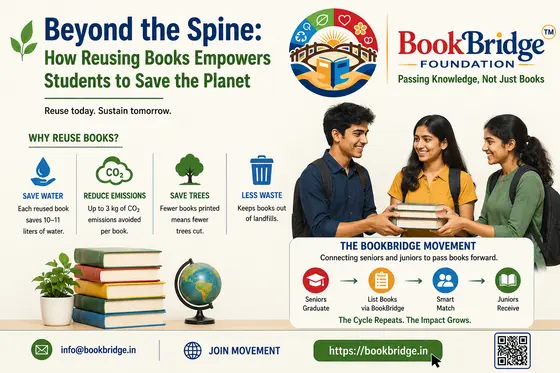
single standard textbook consumes approximately 10–11 liters of water.
Multiply that by millions of textbooks printed every year, and the
environmental burden becomes staggering.
Carbon Emissions from Production and Transport
The
average printed book generates around 2.7–3 kilograms of carbon dioxide
emissions through manufacturing, printing, and transportation. From paper
mills to printing presses and shipping networks, the publishing industry relies
heavily on fossil fuels.
Deforestation and Habitat Loss
Textbook
production contributes to deforestation as millions of trees are harvested
annually to meet paper demand. Forest destruction not only accelerates climate
change but also threatens biodiversity and wildlife habitats.
Chemical Pollution
The
environmental impact does not stop at paper production. Chemical bleaching
agents used during manufacturing can contaminate local waterways, harming
ecosystems and nearby communities.
When
students choose a used book instead of a newly printed copy, they immediately
reduce demand for this resource-intensive cycle.
How Reusing Books Benefits the Environment
Passing a
book from one student to another may seem like a small act, but its
environmental impact is surprisingly powerful.
1. Conserving Natural Resources
Every
reused textbook extends the lifespan of resources that have already been
extracted from the planet.
Imagine a
biology or mathematics textbook being used by four different students over four
academic years instead of four separate copies being printed. That single chain
of reuse could save:
- Nearly 35 liters of water
- Up to 9 kilograms of greenhouse gas emissions
- Multiple sheets of virgin paper and additional packaging materials
The
longer a book stays in circulation, the greater its environmental value
becomes.
2. Reducing Landfill Waste
Many
people assume books are easy to recycle, but textbooks are surprisingly
difficult to process through standard recycling systems.
Their
glossy covers, synthetic laminates, and industrial-strength binding adhesives
often require specialized separation before the paper fibers can be reused. As
a result, millions of books end up in landfills every year.
When
discarded books decompose, they release methane — a greenhouse gas far more
potent than carbon dioxide.
Reusing
books keeps them where they belong: in classrooms, libraries, and students’
hands instead of overflowing waste sites.
3. Challenging Planned Obsolescence in Education
Publishers
frequently release “new editions” that include only minor updates such as
reordered chapters, revised layouts, or small formatting adjustments. This
encourages unnecessary consumption and forces students to repeatedly purchase
expensive new books.
By
embracing a culture of reuse and “Green Learning,” students collectively push
back against wasteful publishing cycles and promote more sustainable
educational practices.
As the
saying goes:
“A book
is a reservoir of energy, time, and natural resources. When we discard it after
a single reading, we waste everything that went into creating it. When we share
it, that investment multiplies in value.”
Spotlight on Change: The BookBridge Movement
Sustainability
does not always require large institutional reforms. Sometimes, meaningful
change begins with one simple question.
That is
exactly how BookBridge was born.
The idea
emerged when Atharva Singh, a Class 11 student from Uttar Pradesh,
India, noticed that perfectly usable textbooks were being forgotten on shelves
or thrown away at the end of the academic year.
He asked:
“Why
can’t seniors just give their books to juniors?”
That
simple observation sparked the idea for a school-based book-sharing platform
designed to create a circular learning ecosystem.
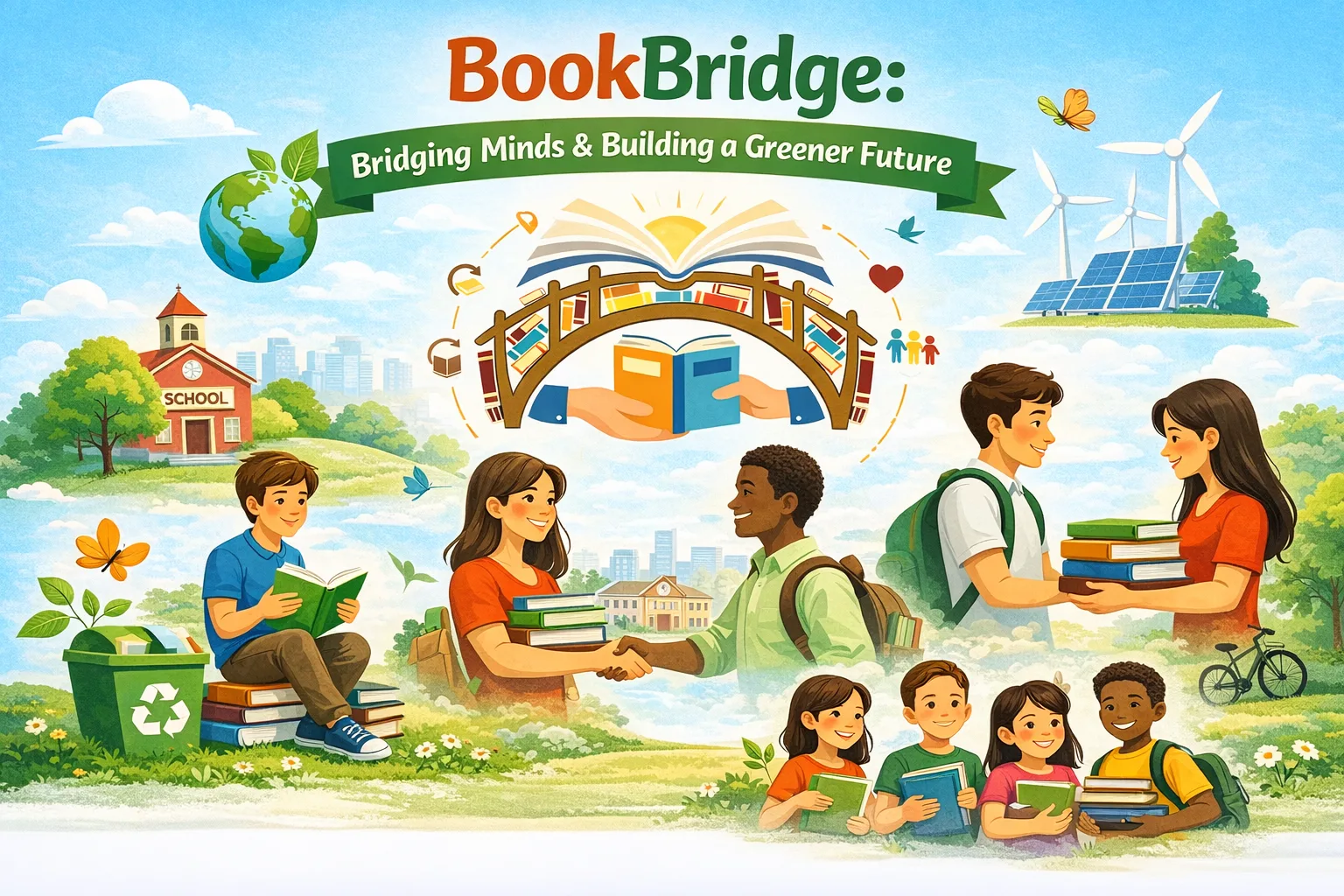
BookBridge
connects students and parents within their own school communities, allowing
seniors to pass textbooks directly to juniors through a secure and organized
network.
The cycle
is simple:
Seniors
Graduate → List Books → Smart Matching → Juniors Receive → Repeat
By
keeping textbooks in active circulation, BookBridge reduces waste, lowers costs
for families, and promotes environmentally conscious learning.
How Students Can Build a Book-Reuse Culture
Creating
a sustainable academic environment starts with practical action. Here are a few
ways students can actively support book reuse within their schools and
colleges.
Organize School Book Swaps
Collaborate
with student councils, clubs, or parent-teacher associations to host annual
textbook exchange events before each academic session.
Use Student Marketplaces
Join
local student groups, community forums, or school-based exchange networks where
seniors can directly connect with juniors.
Choose Rental Programs
Many
libraries and online platforms now offer textbook rental systems that maximize
the lifespan of educational materials.
Donate Responsibly
Instead
of discarding unused books, donate them to:
- Underfunded schools
- Community libraries
- Literacy organizations
- Rural education initiatives
A book
that no longer serves one student can still transform another student’s
education.
The Ultimate Win-Win: Saving the Planet and Saving
Money
One of
the biggest advantages of book reuse is that sustainability and affordability
go hand in hand.
Textbooks
are expensive, and academic costs place significant pressure on students and
families every year. Reusing, renting, or swapping books can dramatically
reduce these expenses.
Students benefit
financially while simultaneously reducing environmental harm.
Few
sustainability solutions are this practical, accessible, and beneficial for
everyone involved.
Turning the Page Toward a Greener Future
Real environmental
change rarely happens through one massive action. It grows through millions of
small, conscious decisions made every day.
The next
time a course syllabus arrives, resist the automatic urge to buy new books
immediately. Ask seniors, explore school exchange networks, or look into rental
options first.
By
keeping books in circulation, students do more than save money. They help
preserve forests, conserve water, reduce carbon emissions, and build a culture
of responsible learning.
Sometimes,
protecting the planet starts with something as simple as turning the next page.