Where to Buy Cheap School Books in India (Online & Offline)
Ayush Mauryavanshi
1 month ago
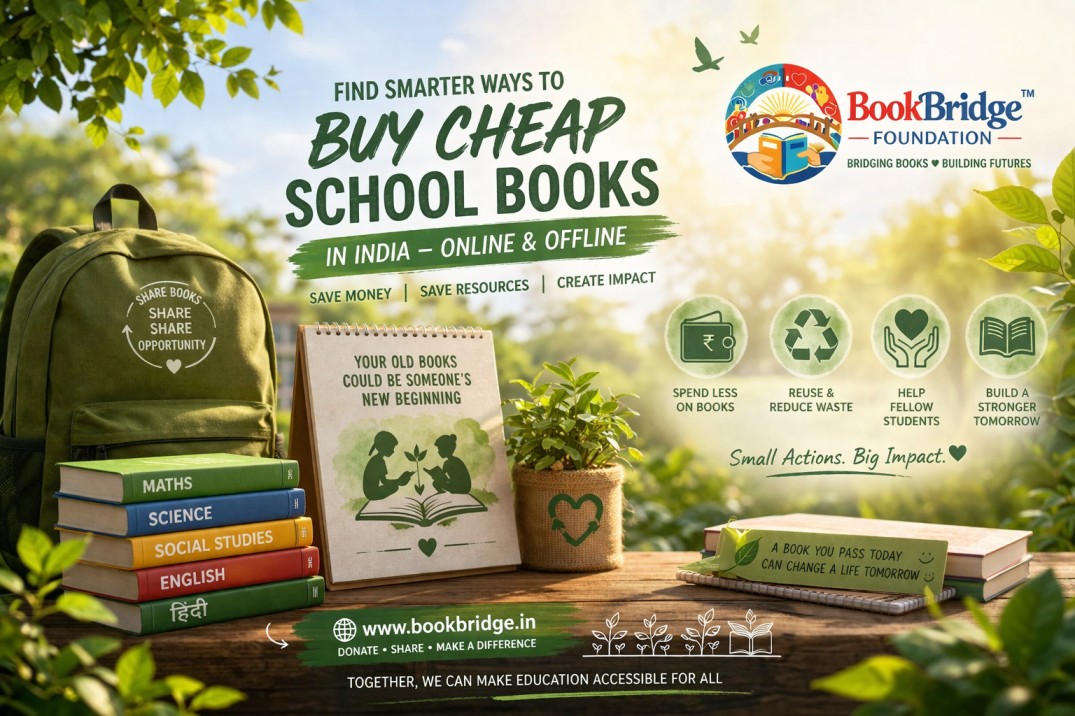
Every academic year, one expense quietly hits Indian families harder than expected — school books. From NCERT textbooks to private school publications, parents often end up spending anywhere between ₹3,000 to ₹15,000 or even more, depending on the class and school. What makes it frustrating is that most of these books are used for just one session and then left untouched.
For many families, especially with more than one child, this becomes a repeating financial burden. And naturally, the first question that comes to mind is:
“Is there a smarter and cheaper way to buy school books?”
The answer is yes — but most people are either unaware of the options or don’t know where to look.
In this guide, we’ll walk you through the best places to buy affordable school books in India, both online and offline. You’ll also discover practical tips to save money, avoid common mistakes, and explore smarter alternatives that many families are now adopting.
Why School Books Are So Expensive in India
If you’ve ever wondered why school books feel overpriced every year, you’re not alone. For most Indian parents, this isn’t just a one-time expense — it’s a recurring cost that keeps increasing without much control.
Let’s break down the real reasons behind it.
1. Private School Book Systems
In many private schools, parents are required to purchase books from specific vendors or school-authorised shops. These are often bundled packages that include:
- textbooks
- workbooks
- practice books
- supplementary materials
The problem?
You usually can’t pick and choose, and prices are rarely competitive. Even if the same content is available cheaper elsewhere, schools often insist on their prescribed set.
2. Frequent Edition & Syllabus Changes
Another major reason is the constant updates in:
- syllabus structure
- book editions
- publication formats
Even a small change in edition can make last year’s book “outdated” — forcing parents to buy new ones.
In reality, most of the content remains similar, but the edition change eliminates the possibility of reuse.
3. One-Year Usage Cycle
This is the biggest inefficiency.
School books are typically used for:
👉 just 8–10 months
After exams:
- they sit unused
- get stored, sold cheaply, or thrown away
Which means:
Parents are paying thousands every year for something with a very short life cycle.
4. Lack of a Structured Reuse System
Unlike uniforms or other school items, there’s no organised system in most schools for:
- passing books from seniors to juniors
- reusing perfectly good textbooks
- managing book exchanges safely
So even when books are in good condition, they rarely reach the next student who needs them.
5. Emotional Buying & Last-Minute Pressure
Another overlooked factor is timing.
At the start of the academic session:
- parents are under pressure
- books are bought in urgency
- there’s little time to compare prices or explore alternatives
This leads to:
👉 quick, expensive decisions instead of smart ones
⚠️ The Real Problem
It’s not just that books are expensive.
It’s that:
- they are underutilised
- there’s no proper reuse system
- and parents are left with limited options every year
Best Places to Buy Cheap School Books Online in India
If you want convenience, variety, and better pricing, buying school books online is often the smartest option. Over the past few years, several platforms in India have made it easier to find discounted, second-hand, and even free textbooks — if you know where to look.
Here are some of the best options:
🛒 1. Amazon India & Flipkart
These are the most common platforms parents turn to.
What you’ll find:
- NCERT books at discounted prices
- Competitive exam books
- Combo bundles for classes
Why it works:
- Easy availability across India
- Regular discounts and deals
- Reliable delivery
Limitations:
- Mostly new books
- Limited second-hand options
👉 Best for: Parents looking for convenience and quick delivery
📚 2. Second-Hand Books
One of the most popular platforms in India for buying used books.
What you’ll find:
- School textbooks at 30–70% lower prices
- Lightly used books in good condition
Why it works:
- Significant cost savings
- Eco-friendly choice
Limitations:
- Availability depends on stock
- Not all school-specific books are listed
👉 Best for: Parents open to second-hand books at lower prices
🧑🎓 3. OLX India & Quikr
These platforms connect buyers directly with local sellers.
What you’ll find:
- Students selling old textbooks
- Local deals at very low prices
Why it works:
- You can negotiate prices
- Often cheaper than any platform
Limitations:
- Requires effort to search
- No guarantee of quality
👉 Best for: People looking for ultra-cheap local deals
📖 4. NCERT Official Website (Free PDFs)
If your child studies in CBSE, this is a hidden gem.
What you’ll find:
- Free downloadable NCERT textbooks (PDF format)
Why it works:
- Completely free
- Official and updated content
Limitations:
- Not physical books
- Not ideal for all students
👉 Best for: Digital access or backup option
🔄 5. BookBridge Foundation (Free Through Exchange)
This is where things get smarter — not just cheaper.
Instead of buying books every year, platforms like BookBridge enable students to exchange textbooks within their own school network.
What makes it different:
- Books are reused instead of repurchased
- Students pass books to juniors
- No cost involved — it’s based on exchange
Why it works:
- Saves 100% of book cost
- Books stay within the same curriculum (same school)
- Safe, structured, and organised system
Limitations:
- Requires school participation
- Still growing across India
👉 Best for: Families who want a long-term, zero-cost solution instead of yearly spending
Best Offline Places to Find Affordable School Books
While online platforms are convenient, many Indian families still find the best deals offline — especially when it comes to second-hand books and quick availability.
Here are the most practical options:
📍 Local Book Markets
Almost every city has areas where multiple bookshops are clustered together.
Why it works:
- Competitive pricing
- Easy comparison between shops
- Discounts on bulk purchases
👉 Best for: Finding cheaper new books
📚 Second-Hand Book Shops
These shops specialise in used textbooks, often sourced from students.
Why it works:
- 30–60% cheaper than new books
- Books usually in usable condition
👉 Best for: Budget-friendly options
🛒 Street Vendors & Seasonal Stalls
During the start of the academic session, temporary book stalls appear near schools and markets.
Why it works:
- Lower prices due to high competition
- Room for negotiation
👉 Best for: Quick and affordable deals
🧑🎓 Buying from Seniors (Same School)
One of the most underrated methods.
Why it works:
- Same syllabus, same books
- Lowest possible cost or even free
👉 Best for: Perfect match + maximum savings
This is one of the most common dilemmas for parents every academic year —
Should you buy brand-new books or go for second-hand ones?
The answer isn’t one-size-fits-all. It depends on cost, condition, and practicality. Let’s break it down simply.
💸 1. Price Comparison
- New Books: Full price, often bundled, limited flexibility
- Second-Hand Books: Usually 30–70% cheaper
If budget is your priority, second-hand books clearly win.
📖 2. Quality & Usability
- New Books: Clean, unused, no markings
- Second-Hand Books: May have highlights, notes, or minor wear
But here’s the reality:
Most second-hand books are still completely usable for study purposes.
In fact, sometimes notes from previous students can even help in revision.
🔁 3. When Second-Hand Books Make More Sense
Second-hand is a better choice when:
- The syllabus hasn’t changed
- You’re buying core subjects (Maths, Science, NCERT)
- The book condition is decent
👉 For most classes, this applies to 70–80% of books
⚠️ 4. When You Should Prefer New Books
New books are better when:
- The school insists on latest editions
- Workbooks need to be written in
- The syllabus has recently changed
👉 Especially common in private schools
🧠 The Smarter Perspective
Most people think the choice is:
New vs Second-Hand
But the smarter shift is:
Buying vs Reusing
Even second-hand books involve cost every year.
That’s why many students are now moving toward book exchange systems within schools, where:
- seniors pass books to juniors
- no money is involved
- books match perfectly with the curriculum
How Book Sharing Platforms Are Changing School Systems
For years, the education system in India has followed the same pattern:
👉 Buy new books → use them for one year → discard or store them
But this model is slowly changing.
With the rise of book sharing platforms, schools and students are beginning to shift toward a smarter, more sustainable approach — where books don’t just end with one student, but continue their journey.
🔄 From One-Time Use to Continuous Use
Traditionally, textbooks have a very short life cycle. But book sharing platforms introduce a simple idea:
One book can educate multiple students — not just one.
Instead of letting books go unused after exams:
- seniors pass them to juniors
- students connect within trusted networks
- books stay relevant within the same school system
This creates a cycle of reuse, not waste.
🏫 Building a Culture of Responsibility in Schools
Beyond cost-saving, this shift is changing student behaviour.
When students participate in book sharing:
- they learn responsibility
- they value resources more
- they actively contribute to helping others
Schools that adopt such systems often see:
- stronger community bonding
- increased student participation
- awareness around sustainability
💸 Reducing Financial Pressure on Families
One of the biggest impacts is financial.
Instead of spending thousands every year:
- families can significantly reduce costs
- in many cases, books can be accessed completely free through exchange
This is especially helpful for:
- families with multiple children
- rising education costs in private schools
🌱 Environmental Impact (Often Ignored)
Every year, lakhs of textbooks go unused or are discarded.
Book sharing platforms help:
- reduce paper waste
- minimise unnecessary printing
- promote sustainable practices in education
It’s a small change — but at scale, it creates a real impact.
🚀 How BookBridge Foundation Works
BookBridge is built to make textbook sharing simple, organised, and accessible across India.
Here’s how the system works:
Step 1: Visit the Website
Go to 👉 www.bookbridge.in
Step 2: List Your Books
Add details like class, subject, board, and condition
Step 3: Connect with Receivers
Students or parents looking for books can reach out
Step 4: Donate & Share
Hand over books directly or arrange delivery
Step 5: Make an Impact
Your old books now help someone continue their education
Conclusion
Buying school books every year doesn’t have to be an expensive, repetitive burden.
As we’ve seen, there are plenty of practical ways to reduce costs — from buying discounted books online and exploring second-hand options to checking local markets and connecting with students nearby. With a little awareness and planning, parents can easily save a significant amount on education expenses without compromising on quality.
But the real shift happens when we stop thinking only about buying cheaper books and start thinking about using books smarter.
Instead of letting textbooks sit unused after exams, they can continue helping other students. This is where structured sharing and exchange systems are creating a meaningful difference — not just in saving money, but also in reducing waste and building a sense of responsibility among students.
Platforms like BookBridge Foundation are making this transition easier by enabling students and parents to reuse books within their own networks — often at zero cost through exchange.
In the end, the goal isn’t just to spend less — it’s to make better decisions.
Because when one book can support multiple students,
it’s not just a smart choice for your wallet —
it’s a smarter step for education as a whole.